
Safety
Radon Testing in Kelowna: What Homeowners Need to Know
A practical guide to the 91-day test, the 200 Bq/m³ guideline and what to do with the result.
Jonathan Larose-SabourinPublished November 16, 20268 min read
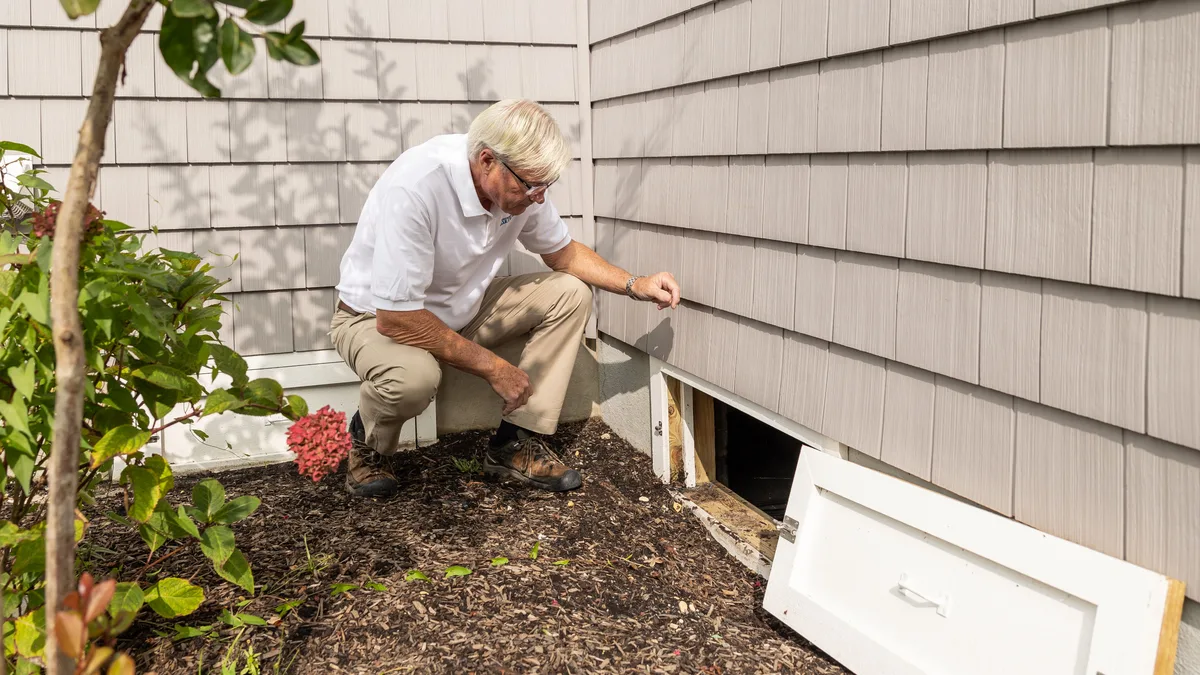
Radon is invisible and has no smell or taste. That is why the only way to know the level in a Kelowna home is to test it. A quick reading can be misleading, and a result from a neighbouring house does not answer the question for yours. This guide explains how radon gets into a home, why a long-term test is the one that counts, where to get a test in Kelowna, how to run it properly and when a result calls for a certified mitigation professional.
What is radon and why are Kelowna homes tested?
Radon is a colourless, odourless, tasteless radioactive gas that comes from the breakdown of uranium in soil and rock. According to the Canadian National Radon Proficiency Program, it filters up from the ground and enters buildings that are in contact with the ground. Outdoors it is diluted by the air, but indoors it can build up to levels that matter.
The health concern is lung cancer. The Canadian National Radon Proficiency Program states that radon is the leading cause of lung cancer after smoking, responsible for 16% of all lung cancer and over 3,000 deaths nationally. Health Canada's 2024 cross-Canada radon survey estimates that about one in five homes will have a high radon level. Those are national figures, not a prediction for any single house.
Local testing gives a clearer picture of the neighbourhood. A Kelowna community report published in 2024 by Take Action on Radon, with the BC Lung Foundation, describes 1,172 homes tested during the winters of 2020 to 2023 using 91-day alpha track detectors. That is about 1% of community dwellings. In that sample, 21% tested above 200 Bq/m³, 33% tested between 100 and 200 Bq/m³, and 46% tested under 100 Bq/m³. This is a community sample, not a random survey of every home. Levels can vary between neighbouring houses, so the only way to know the level in a particular home is to test that home.
Long-term testing versus a quick test
A short reading does not capture the year-round average. That is why Health Canada's guide for radon measurements in homes calls for a long-term test of at least 91 days during the heating season. Health Canada recommends a test period of 3 to 12 months. The BC Centre for Disease Control describes the most accurate approach as a long-term test over at least 90 days, in the lowest level where residents spend at least 4 hours a day, over winter.
A short-term test is anything less than 91 days. Health Canada's measurement guide says a short-term result should not be used alone to decide whether a home has a problem. The BC Centre for Disease Control puts it plainly: short-term testing should not be used alone to determine if a home has a problem, and any initial short-term test should be followed by a long-term test. A quick test can be a prompt to keep testing. It is not the finish line.
Where can you get a test in Kelowna?
There are three practical routes in the Central Okanagan, and they all end with a lab-analyzed detector or a certified professional's test.
- Buy an alpha track detector kit from the BC Lung Foundation. BC Lung says it sells an alpha track detector kit, and its BC Radon Map shows community data. The kit is mailed to a lab for analysis after the test period.
- Borrow a detector from a participating Okanagan Regional Library branch. BC Lung's library lending page lists Kelowna, Rutland and Westbank among the participating branches, with a 4-week loan and no renewals. Check current availability before you plan around it.
- Buy a kit through the route described by Interior Health. A 2024 Interior Health article describes a Radtrak3 Alpha Track Detector sold for $49.99, including shipping and lab analysis, with letter-envelope postage to the lab extra. That price is from the 2024 article; check the current price before ordering.
If you are buying a home, a home inspector can help you understand the lowest lived-in level and any crawl space or basement conditions that affect where a detector should go. The radon test itself still needs to follow Health Canada's placement and duration rules, and the result should come from a lab-analyzed detector or a certified radon professional.
Whichever route you choose, confirm what the kit includes, whether lab analysis and return postage are covered, and how long the results take before you start.
How do you run the test correctly?
Placement matters as much as duration. Health Canada's measurement guide says to place the detector in the lowest level of the home where residents spend at least 4 hours per day. The guideline defines the normal occupancy area as any part of the building where a person is likely to spend more than 4 hours per day, and it excludes crawl spaces and unfinished basements. A detector in a sealed crawl space is not measuring the air you breathe in the living area.
Once the test starts, leave the detector where it is and let the home operate normally. Health Canada's guide says residents should not alter their lifestyle during a long-term radon test. Do not move the detector, do not open it and do not send it back early. Follow the kit's start and end dates, then return it to the lab as directed.
What does the result mean?
Canada's radon guideline is 200 becquerels per cubic metre, written as 200 Bq/m³. Health Canada says to take corrective action if the average annual radon level exceeds 200 Bq/m³ in the normal occupancy area. The guideline also says there is no level considered risk free: the health risk below the guideline is small, but it is not zero.
If the result is at or above the guideline, Health Canada's guidance is to take corrective action within one year, and sooner if the radon level is higher. The goal is to reduce the level as low as reasonably practicable. If the result is below 200 Bq/m³, no immediate action is required, but Health Canada advises retesting after major renovations or energy-efficiency retrofits.
| Result | What it means | Next step |
|---|---|---|
| Below 200 Bq/m³ | Lower measured radon during the test; no immediate action required | Retest after major renovations or energy-efficiency retrofits, or if conditions change |
| At or above 200 Bq/m³ | The average annual level in the normal occupancy area exceeds the Canadian guideline | Take corrective action within one year, sooner if the level is higher; hire a C-NRPP-certified professional |
| Test shorter than 91 days | Not reliable enough to decide whether the home has a problem | Run a long-term test of at least 91 days during the heating season |
When should you hire a certified mitigation professional?
Health Canada's guidance says to hire a C-NRPP-certified radon mitigation professional if the radon level is 200 Bq/m³ or higher. Certification matters because mitigation is not a do-it-yourself fan installation. Health Canada's radon action guide for provinces and territories says a radon mitigation system can reduce the radon level by more than 80% in most homes, and can be installed in less than a day.
A certified professional should assess the home, explain the proposed system and provide a clear scope of work. Ask for the C-NRPP certification number and check it through the C-NRPP directory before work begins. A mitigation system is an active system, typically using a fan to depressurize the subfloor, not a passive rough-in.
The BC Building Code 2024 changed the rough-in rule for new homes. The Province's radon rough-in bulletin says the 2024 code requires a radon rough-in for Part 9 buildings for projects with a building permit applied for on or after March 8, 2024. The 2024 code also eliminated the exemption for certain areas, so unless a building is designed under Parts 5 and 6, new houses must provide a rough-in.
A rough-in is not the same as an active mitigation system. The Province's bulletin states that the Building Code does not require active subfloor depressurization systems, meaning a fan is not required. The bulletin also says there is no BC Code requirement for testing after occupancy, and testing is the building owner's responsibility. In plain terms, a rough-in is a code requirement for many new homes; it is not a measurement and it does not guarantee the home is below the guideline.
Frequently asked questions
Where to start in Kelowna
Start with a long-term test, not a quick reading. Choose a kit or a library detector, place it in the lowest level where someone spends at least four hours a day, and let it run for the full heating-season period. If the result is at or above 200 Bq/m³, hire a C-NRPP-certified professional and ask what the system will do and how the work will be verified. If you are buying or selling, confirm any disclosure duty with the relevant authority.
The Kelowna home inspectors trade page lists local inspectors, and the guide to choosing a home inspector explains what to ask before hiring.
Sources
- Government of Canada radon guideline
Health Canada · Canada; 200 Bq/m³ guideline and corrective action
Accessed November 16, 2026
- Guide for radon measurements in residential dwellings
Health Canada · Canada; test duration, placement and short-term limits
Accessed November 16, 2026
- Radon action guide for provinces and territories
Health Canada · Canada; national survey estimate and mitigation effectiveness
Accessed November 16, 2026
- Radon
BC Centre for Disease Control · British Columbia; long-term testing and short-term limits
Accessed November 16, 2026
- Radon
BC Lung Foundation · British Columbia; kits, BC Radon Map and first-test advice
Accessed November 16, 2026
- Radon detector library lending program
BC Lung Foundation · Okanagan; library branches and 4-week loan period
Accessed November 16, 2026
- How to get a radon detector or monitor to test your home
Interior Health · Published November 6, 2024 · British Columbia; 91-day winter test and 2024 kit price
Accessed November 16, 2026
- What is radon?
Canadian National Radon Proficiency Program · Canada; what radon is, how it enters and health context
Accessed November 16, 2026
- Canadian National Radon Proficiency Program
Canadian National Radon Proficiency Program · Canada; certification and finding a professional
Accessed November 16, 2026
- Kelowna BC Community Report 2024
Take Action on Radon, with the BC Lung Foundation · Published 2024-10 · City of Kelowna community sample
Accessed November 16, 2026
- Radon rough-in requirements bulletin
Province of British Columbia · Published 2024 · British Columbia; BC Building Code 2024 rough-in rule
Accessed November 16, 2026
- 2024 BC Building Codes
Province of British Columbia · Published 2024 · British Columbia; effective date of the 2024 code
Accessed November 16, 2026
Common questions
How long should a radon test last in Kelowna?
Can I use a short-term radon test result?
What radon level is too high?
Does a new-home radon rough-in mean I do not need to test?
Where can I borrow a radon detector in Kelowna?

Written by
Jonathan Larose-Sabourin
Founder, Loonglade Web Studio · Kelowna, British Columbia
Jonathan Larose-Sabourin is the founder of Loonglade Web Studio, the Kelowna-based studio that operates this trades registry. He writes about local home-services rules, costs and maintenance for Kelowna homeowners.
Share this story
Related stories
Safety
Wildfire Smoke and Your Kelowna Home: What Helps
A room-by-room plan for smoky days, including what to run, what to buy and when to leave the house.
November 16, 2026 · 9 min read
Home Maintenance
Attic Condensation in Kelowna Winters: Causes and Fixes
A cheap two-visit inspection that separates air-leak condensation from roof-leak water, then fixes air sealing, ventilation and insulation in order.
November 21, 2026 · 8 min read
Permits & Rules
Fence Height Rules in Kelowna: What the Bylaw Says
The bylaw numbers, the lot-type exceptions and the steps that keep a new fence out of a bylaw complaint.
November 21, 2026 · 8 min read
Find home inspectors in Kelowna
Compare local listings on the Home Inspectors in Kelowna page.
Before you call, read the How to Choose a Home Inspector in Kelowna.
Save the pros you trust.
Create a free account to save listings, compare them later, and rate the tradespeople you hire — it helps your neighbours hire well.