
Safety
Wildfire Smoke and Your Kelowna Home: What Helps
A room-by-room plan for smoky days, including what to run, what to buy and when to leave the house.
Jonathan Larose-SabourinPublished November 16, 20269 min read
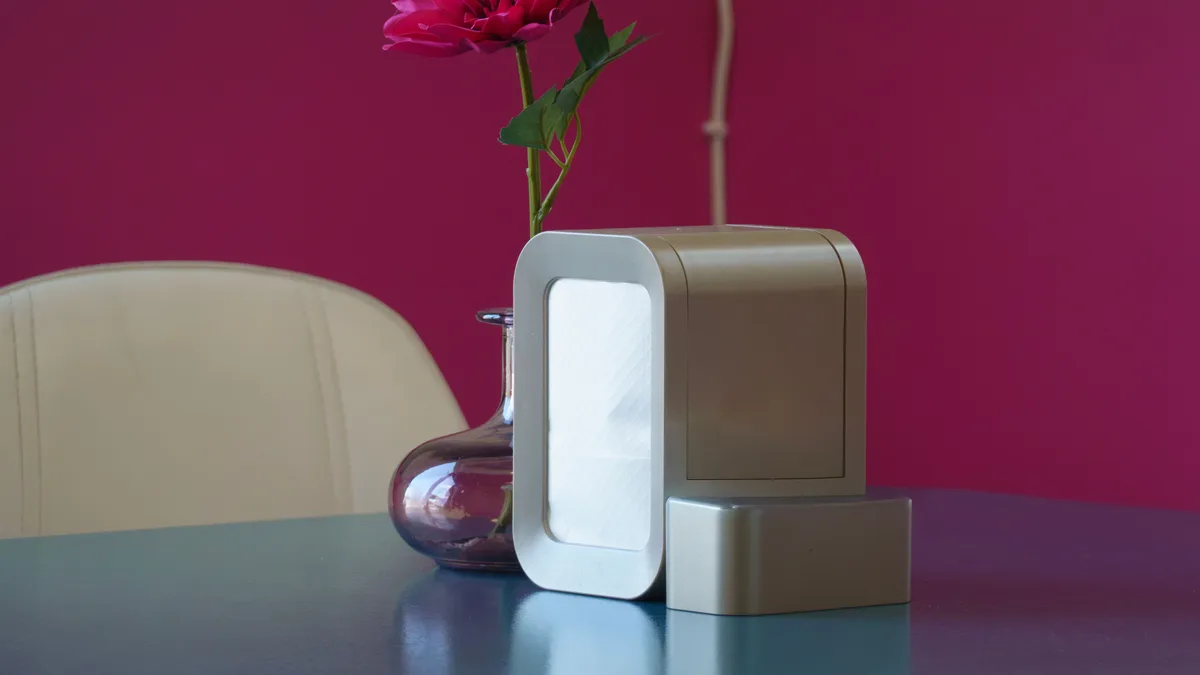
Wildfire smoke does not stop at the front door. It seeps through windows, doors, vents and small gaps, and the fine particles in smoke are the part health agencies worry about most. The good news is that a Kelowna home does not need a laboratory-grade air system to be a safer place on a smoky day. A certified portable air cleaner in one room, a sensible filter in a forced-air system and a plan for hot weather cover most of the practical decisions. This guide explains what helps, what wastes money and when the right move is to leave the house or call for medical advice.
What wildfire smoke does inside a Kelowna home
Wildfire smoke is a mixture of gases and particles. The smallest particles can travel deep into the lungs and are linked to irritation and inflammation, especially for people with asthma, chronic obstructive pulmonary disease, heart disease, and for infants, young children, pregnant people and older adults. Smoke enters a house through open windows and doors, through vents and air intakes, and through the small gaps around frames and services. That is why indoor air can stay smoky for hours after the sky looks clearer.
The BC Centre for Disease Control notes that most people spend up to 90% of their time indoors. On a smoke day, that statistic turns indoor air into the main exposure route. It also means the first job is not to chase every particle in the house, but to make one room noticeably cleaner and to keep the rest of the house from pulling in more smoke than necessary.
Should you run your furnace or heat pump?
For a home with forced-air heating, the BCCDC advises talking to your service provider about which filters and settings to use during smoky conditions. The filter matters more than the fan setting. Health Canada recommends a filter rated MERV 13 or higher where the system can handle it, because those filters capture more of the fine particles in smoke. Not every residential furnace or heat pump can move enough air through a high-efficiency filter, so the safe approach is to ask an HVAC contractor what your equipment supports rather than forcing in the highest-rated filter you can find.
Health Canada also recommends switching the system to recirculation mode when outdoor air quality is poor, then drawing in fresh air again when the smoke clears. Recirculation keeps the system from pulling smoky outdoor air inside. At the same time, it can trap carbon dioxide and other indoor pollutants, which is why the guidance is temporary rather than permanent. If your system has a fresh-air intake you cannot control, ask the contractor how it behaves during a smoke event.
A ductless heat pump or a single indoor head is not a whole-home air cleaner. It can keep a room comfortable, but it does not replace the particle filtration that a certified HEPA portable cleaner or a properly rated central filter provides. In a house without ductwork, the practical combination is usually a portable HEPA unit in the room where people spend the most time, plus a plan to keep doors and windows closed while the unit runs.
Portable air cleaners and filters that actually help
Most portable air cleaners use high-efficiency particulate air, or HEPA, filters to trap the very small particles in wildfire smoke. In the studies reviewed by the BCCDC, portable air cleaners reduced small particle concentrations by 40–80% in most cases. That is a meaningful reduction, but it depends on choosing a unit sized for the room and running it long enough to cycle the air.
| Option | What it removes | Main caution |
|---|---|---|
| Portable HEPA air cleaner | Fine particles, including smoke particles | Size it for the room and run it continuously with doors and windows closed |
| Central HVAC filter rated MERV 13 or higher | More fine particles than a basic filter, when the system can handle the airflow | Confirm compatibility with an HVAC contractor before upgrading |
| DIY box fan with a MERV 13 filter | Fine particles, at low cost | Use a 2012-or-later fan with a safety fuse; never leave it unattended |
| Electrostatic precipitator | Particles, but the process can create ozone | People with respiratory conditions should consider HEPA only |
| Ozone generator or negative ionizer | Not an effective way to remove smoke particles | Skip it for smoke; ozone can irritate lungs |
Look for a unit certified by the Association of Home Appliance Manufacturers. The AHAM label states the square footage the unit can clean and gives a clean air delivery rate for tobacco smoke, dust and pollen. Tobacco smoke is the closest of those test categories to wildfire smoke. Some units also have an activated carbon filter, which can reduce odours and some gases, but the particle filter is the part doing the health-relevant work.
Maintenance is part of the filter decision. A clogged filter stops cleaning well even if the fan is still running. Choose a unit that clearly signals when the filter needs changing, keep a spare on hand before smoke season, and follow the manufacturer's instructions. The BCCDC notes that prices range from less than $100 to more than $1,000, so it is worth matching the unit to the room rather than buying the largest machine for a bedroom.
Creating a cleaner room
A cleaner room is a small, practical shelter inside the house. Interior Health recommends designating one room and running a portable HEPA air cleaner there to keep smoke particles down. The BCCDC adds that portable cleaners work best when they run continuously with doors and windows closed, and that they should be used in the rooms where people spend most of their time.
- Pick a room that can be closed off, ideally a bedroom or living area where someone can rest.
- Run a certified HEPA cleaner sized for that room, and keep the door closed while it runs.
- Seal obvious gaps around windows and doors with weather stripping or a removable seal, but do not block ventilation you need for safety.
- Limit exhaust fans, including bathroom fans, when you are not cooking or clearing moisture.
- Avoid adding indoor pollution: do not burn candles, use a wood stove, smoke tobacco or vape in the cleaner room.
- If the house gets too hot, prioritise cooling. Interior Health and Health Canada both say heat is a bigger risk than smoke for most people.
Not every home can make a good cleaner room. If you cannot keep the air clean or the house is too hot with the windows closed, use a community cleaner-air space. The BCCDC points to libraries, community centres and shopping malls as places that often have cooler, filtered air. In Kelowna, a public library or recreation facility is a practical break from a smoky house, especially for older adults, young children and anyone with a chronic condition.
What not to do during a smoke event
- Do not rely on a cloth or surgical mask to protect you indoors. Interior Health says those masks do not filter fine smoke particles; a well-fitted N95 or KN95 is the respirator option when you must be outdoors.
- Do not run an ozone generator or negative ionizer and expect cleaner smoke-free air. The BCCDC says those devices cannot effectively remove smoke particles, and ozone can irritate the lungs.
- Do not seal the house so tightly that it overheats. If you cannot stay cool with the windows closed, cooling takes priority.
- Do not leave a DIY box-fan cleaner running unattended, and do not use an extension cord with it. Health Canada lists both as safety risks.
- Do not assume the smell tells the whole story. Smoke can be present at levels that still matter after the odour fades, so check the Air Quality Health Index and local warnings.
- Do not schedule strenuous outdoor work or exercise when the AQHI is high. Move the activity indoors or reschedule it.
The Air Quality Health Index is the quickest public check. It runs from 1 to 10+, with 1–3 rated low risk, 4–6 moderate, 7–10 high and above 10 very high. During a wildfire smoke event, Environment and Climate Change Canada calculates the AQHI hourly using only fine particulate matter, because that pollutant drives the risk. At 10+, the agency says everyone's health is at risk.
When to leave or seek medical advice
Interior Health lists irritated eyes, a runny nose and a scratchy or sore throat as early symptoms. Those are a signal to reduce exposure, not necessarily an emergency. Shortness of breath, heart palpitations, chest pain or feeling generally unwell are different: Interior Health says that is the point to seek medical care or talk to a health-care provider. Call 8-1-1 for health advice or 9-1-1 for an emergency.
Leave the house for a cleaner space if you cannot keep indoor air clean, if the heat is unsafe, or if someone in the home is developing symptoms and has no way to get away from the smoke. People with asthma, COPD, heart disease, older adults, infants, young children and pregnant people should be quicker to move to cleaner air. A planned break in a cool, filtered public space is better than waiting for the situation to become an emergency.
Where to start in Kelowna
Start with the free information: check the AQHI and the BC Wildfire Service for current conditions, then decide whether today is a cleaner-room day or a leave-the-house day. If you have forced-air heating, ask an HVAC contractor which filter your system can safely use and how to set recirculation. The HVAC trade page lists local contractors, and the guide to choosing an HVAC contractor explains what to ask before booking. The Kelowna city hub is the place to compare other local trades, including restoration services, when smoke damage or a related repair needs attention.
Sources
- Portable Air Cleaners for Wildfire Smoke
BC Centre for Disease Control · Published 2024-05 · Canada; portable air cleaners
Accessed November 16, 2026
- Do-It-Yourself Air Cleaners
BC Centre for Disease Control · Published 2025-06 · Canada; DIY box-fan air cleaners
Accessed November 16, 2026
- Guidance for Cleaner Air Spaces during Wildfire Smoke Events
Health Canada · Published September 28, 2020 · Canada; buildings with HVAC systems
Accessed November 16, 2026
- Wildfire smoke and your health
Health Canada · Published May 14, 2021 · Canada; home air quality during smoke
Accessed November 16, 2026
- About the Air Quality Health Index
Environment and Climate Change Canada · Canada; AQHI categories
Accessed November 16, 2026
- Wildfire smoke, air quality and your health
Environment and Climate Change Canada · Published June 29, 2023 · Canada; AQHI during smoke events
Accessed November 16, 2026
- Tips to protect yourself from poor air quality & wildfire smoke
Interior Health · Published July 2, 2026 · British Columbia Interior
Accessed November 16, 2026
- Preparing for the wildfire smoke season
BC Centre for Disease Control · Published 2024-06 · British Columbia; community cleaner-air spaces
Accessed November 16, 2026
- BC Wildfire Service
Province of British Columbia · British Columbia; current wildfire status
Accessed November 16, 2026
Common questions
Do I need a HEPA air cleaner for wildfire smoke?
Can I run my furnace fan during a smoke event?
Does an N95 mask help indoors?
Is it safe to open windows when the house is hot?

Written by
Jonathan Larose-Sabourin
Founder, Loonglade Web Studio · Kelowna, British Columbia
Jonathan Larose-Sabourin is the founder of Loonglade Web Studio, the Kelowna-based studio that operates this trades registry. He writes about local home-services rules, costs and maintenance for Kelowna homeowners.
Share this story
Related stories
Safety
Radon Testing in Kelowna: What Homeowners Need to Know
A practical guide to the 91-day test, the 200 Bq/m³ guideline and what to do with the result.
November 16, 2026 · 8 min read
Home Maintenance
Attic Condensation in Kelowna Winters: Causes and Fixes
A cheap two-visit inspection that separates air-leak condensation from roof-leak water, then fixes air sealing, ventilation and insulation in order.
November 21, 2026 · 8 min read
Permits & Rules
Fence Height Rules in Kelowna: What the Bylaw Says
The bylaw numbers, the lot-type exceptions and the steps that keep a new fence out of a bylaw complaint.
November 21, 2026 · 8 min read
Find hvac in Kelowna
Compare local listings on the HVAC in Kelowna page.
Before you call, read the How to Choose an HVAC Contractor in Kelowna.
Save the pros you trust.
Create a free account to save listings, compare them later, and rate the tradespeople you hire — it helps your neighbours hire well.