
Permits & Rules
Fence Height Rules in Kelowna: What the Bylaw Says
The bylaw numbers, the lot-type exceptions and the steps that keep a new fence out of a bylaw complaint.
Jonathan Larose-SabourinPublished November 21, 20268 min read
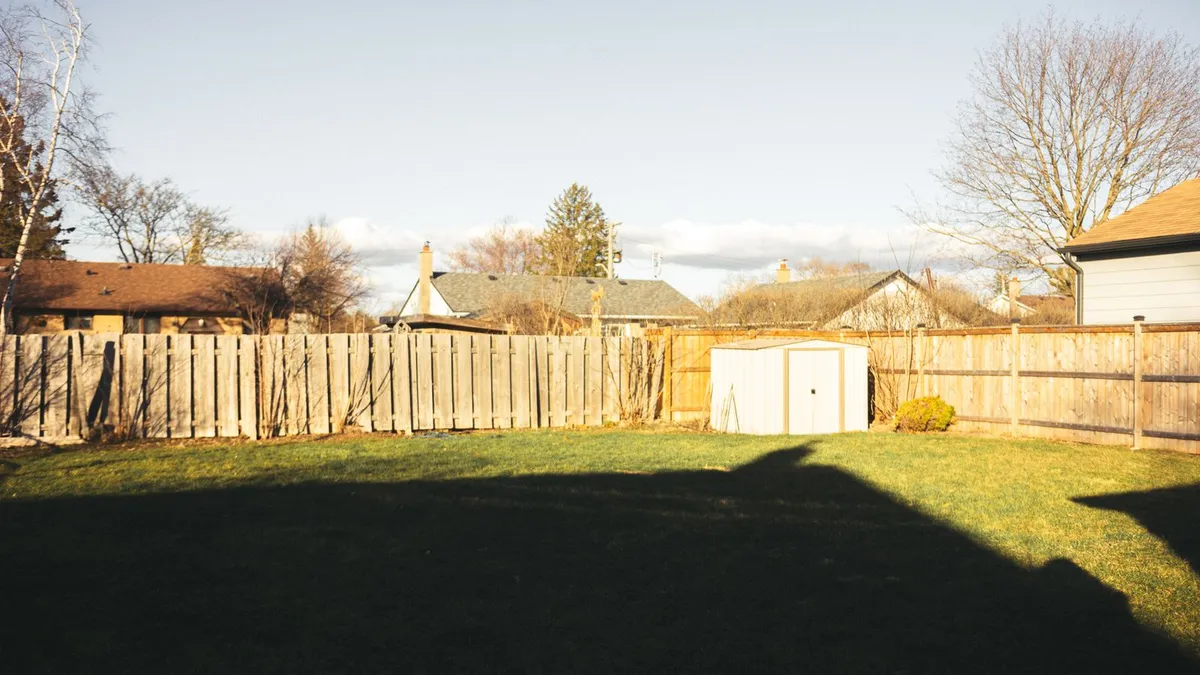
Kelowna does not have one fence height. The number changes with where the fence sits: 1.2 metres along a street-facing setback, 2.0 metres in most residential side and rear yards, 2.4 metres on commercial and industrial land, and a narrow 3.0-metre allowance on the low side of a sloping lot. The details that cause trouble are measuring from the wrong ground level, missing a corner sight line, or building over a property line. This guide translates Zoning Bylaw No. 12375 and ends with steps that prevent a bylaw complaint.
What is the basic fence height limit in Kelowna?
The City's planning FAQ gives the short version. A fence along a property line that fronts a street is typically limited to 1.2 metres, measured from the ground to the top of the panel. Side and rear yards allow up to 2.0 metres. Those numbers cover most suburban residential lots and match Section 7.5.2 of the zoning bylaw.
The bylaw adds limits for rural, commercial, industrial, corner and sloping lots. It measures height from natural grade, so the ground at the fence line matters as much as the panel. If a contractor quotes one number for the whole yard, ask which zone and yard they measured.
Which height applies to your lot?
| Where the fence sits | Limit | What to check |
|---|---|---|
| Front or flanking yard setback, residential | 1.2 m | Inside the setback along a street, including a corner lot's side street. |
| Side or rear yard, suburban residential, multi-dwelling, village or urban centre | 2.0 m | The common residential limit outside front and flanking setbacks. |
| Rural residential | 2.0 m | 2.4 m where abutting an agricultural, industrial or commercial zone. |
| Commercial, public and institutional, or industrial | 2.4 m | Industrial storage yards need an opaque 2.4 m fence. |
| Low side next to a higher neighbouring lot | 3.0 m | No more than 2.0 m above the neighbour's elevation. |
| Corner lot sight triangle | No fence from 1.0 m to 3.0 m | Up to 8 m along each property line inside the Schedule J triangle. |
| Within 1.4 m of a building | Non-combustible only | Metal, brick, stucco or concrete; no wood or vinyl. |
| Around a swimming pool | At least 1.07 m | Separate Building Bylaw rules for openings and the gate. |
A flanking yard is the side yard that faces a street, so a corner lot can have two street-facing yards. The 1.2-metre limit applies inside the required setback. Behind it, the 2.0-metre residential limit can apply. Ask the City where the setback line falls.
How do you measure height on a sloping lot?
The bylaw measures height from natural grade, not from a raised planter or a new patio. Natural grade is the ground level before the project changes it. On a slope, the same fence can look short from one side and tall from the other.
Section 7.5.2(d) adds a slope allowance. If a fence abuts a higher neighbouring lot and is built on the low side, the maximum is 3.0 metres, as long as it does not protrude more than 2.0 metres above the neighbour's elevation.
Suppose your yard is 0.6 metres lower than the neighbour behind you. A 3.0-metre fence from your side would stand 2.4 metres above their ground, over the 2.0-metre limit. The maximum is 2.6 metres from your grade: 0.6 metres of difference plus 2.0 metres above their side. If their yard is 1.2 metres higher, a 3.0-metre fence stands 1.8 metres above them, so the 3.0-metre cap applies.
Use a survey or a builder who has measured the line and elevations. Do not estimate from the existing fence, and do not assume the 3.0-metre allowance applies because the lot is sloped.
What changes on a corner lot?
The corner sight line comes from the Traffic Bylaw. Section 2.2.1 says the owner of a corner lot at an intersection of two highways must not allow a fence, retaining wall or vegetation between 1.0 and 3.0 metres above the finished grade of the abutting highways inside the Schedule J triangle. On private property the intrusion is limited to 8 metres back along both property lines, and objects in the boulevard cannot be taller than 0.5 metres.
The restricted zone is not just the first metre above ground. Anything from 1.0 to 3.0 metres high can block the sight line, so a 2.0-metre fence that is fine mid-block can be a problem near the corner.
What about retaining walls and fences close to the house?
Retaining walls are a separate bylaw section. An individual wall cannot exceed 1.2 metres from grade on the lower side, unless the subject lot is lower than the abutting property, in which case it can go to 3.0 metres. Any wall over 1.2 metres needs an engineer. Tiered walls need 1.2 metres of horizontal separation, and without an engineer the limit is two tiers and 2.4 metres total.
Section 7.5.8 requires any portion of a fence within 1.4 metres of a building to be non-combustible: metal, brick, stucco or concrete. Wood and vinyl are not permitted in that strip.
Other rules matter before you choose a style. Metal pickets or finials cannot extend above a horizontal rail. Barbed wire is banned in residential zones, and razor wire is limited to places such as jails. No fence can be built at or below the 343-metre high-water mark of Okanagan Lake.
Do you need a permit to build a fence in Kelowna?
Permit requirements depend on the fence and the site, so confirm with the City's Building & Permitting branch before you build. A pool enclosure is part of a pool permit. A retaining wall over 1.2 metres needs a permit and an engineer. A fence taller than the bylaw allows needs a development variance permit, decided site by site.
A swimming pool needs a building permit, and Part 11 of the Building Bylaw sets the barrier rules. The barrier must be at least 1.07 metres high, with openings that will not let a 10-centimetre sphere pass. No member or opening between 10 and 90 centimetres above grade can make it easy to climb. Access other than through a dwelling needs a self-closing gate that returns to locked, with a spring lock on the pool side at least 90 centimetres above grade.
Ask the City before ordering materials if the fence is on a retaining wall, within 1.4 metres of the house, on a corner, or above the base height. Those are the cases where the answer changes. The building permit guide covers the wider system.
How do you avoid a neighbour dispute or a removal order?
A fence dispute can start with a line that was never checked. The fence looks like the boundary, everyone treats it as the boundary, and then a survey shows it is not. These steps are cheaper than fixing that after the posts are in.
- Locate the line. The City's Map Viewer is a screening tool; the City says to use a professional surveyor to locate property lines accurately. A previous survey may be available through the Property Information Request process.
- Check the title. Easements, covenants and statutory rights of way can restrict where a fence can go. A lawyer can help interpret them.
- Agree on the side. A fence on your land is yours; a fence on the property line is shared. People's Law School says neighbours are generally equal partners, with exceptions. Put the location, height, material and cost split in writing.
- Talk before you build. A short email or signed note with the agreed height and location is cheaper than a dispute.
- Call BC 1 Call before digging at 1-800-474-6886. It marks buried utilities free.
- If it goes wrong, use the right process. A bylaw complaint goes to Bylaw Services. Most money claims up to $5,000 can go to the Civil Resolution Tribunal. A fence over the line can end in BC Supreme Court under section 36 of the Property Law Act.
Where to start in Kelowna
Start with a zoning check, then measure the line, then talk to the neighbour if the fence is shared. For the build, compare local fence and deck builders and use the guide to choosing a fence and deck builder to compare quotes on the same scope. The building permit guide covers larger projects, and the Kelowna city hub lists other trades.
Before you sign, ask the builder how they will measure from natural grade, handle the corner sight line, and confirm the property line. A builder who answers without guessing is the one to keep.
Sources
- Zoning Bylaw No. 12375
City of Kelowna · Published May 5, 2026 · Kelowna, BC; sections 7.5 Fencing and 7.6 Retaining Walls
Accessed November 19, 2026
- Traffic Bylaw No. 8120, Part 2 — General Regulations
City of Kelowna · Published May 11, 2026 · Kelowna, BC; section 2.2.1 intersection sight lines
Accessed November 19, 2026
- Building Bylaw No. 7245
City of Kelowna · Published March 1, 2021 · Kelowna, BC; Part 11 private swimming pools
Accessed November 19, 2026
- Planning and development FAQs
City of Kelowna · Kelowna, BC; fencing, property lines and bylaw complaints
Accessed November 19, 2026
- Swimming pools
City of Kelowna · Kelowna, BC; pool building permit
Accessed November 19, 2026
- Bulletin: Retaining Walls
City of Kelowna · Published September 18, 2024 · Kelowna, BC; retaining wall heights and permits
Accessed November 19, 2026
- Development variance permits
City of Kelowna · Kelowna, BC; variance process for bylaw non-compliance
Accessed November 19, 2026
- Land Survey Plans
Land Title and Survey Authority of British Columbia · British Columbia; survey plans and locating property boundaries
Accessed November 19, 2026
- Small Claims
Civil Resolution Tribunal · British Columbia; small claims up to $5,000
Accessed November 19, 2026
- Property Law Act, section 36
King's Printer for British Columbia · British Columbia; encroachment on adjoining land
Accessed November 19, 2026
- Fences and neighbours
People's Law School · Published July 15, 2022 · British Columbia; shared fences and boundary disputes
Accessed November 19, 2026
Common questions
How tall can a fence be in Kelowna?
Do I need a permit to build a fence in Kelowna?
Can I build a 6-foot fence in Kelowna?
What happens if my fence is over the property line?
Who pays for a shared fence in BC?

Written by
Jonathan Larose-Sabourin
Founder, Loonglade Web Studio · Kelowna, British Columbia
Jonathan Larose-Sabourin is the founder of Loonglade Web Studio, the Kelowna-based studio that operates this trades registry. He writes about local home-services rules, costs and maintenance for Kelowna homeowners.
Share this story
Related stories
Permits & Rules
Secondary Suite Rules in Kelowna: Permits and Inspections
The City's current suite requirements, translated into the questions to settle before you hire anyone.
November 16, 2026 · 9 min read
Permits & Rules
Strata Repairs in Kelowna: Who Fixes What
The useful answer is not “the strata” or “the owner.” It is the strata plan, the bylaws and the Act, in that order.
November 16, 2026 · 11 min read
Home Maintenance
Attic Condensation in Kelowna Winters: Causes and Fixes
A cheap two-visit inspection that separates air-leak condensation from roof-leak water, then fixes air sealing, ventilation and insulation in order.
November 21, 2026 · 8 min read
Find fencing & decks in Kelowna
Compare local listings on the Fencing & Decks in Kelowna page.
Before you call, read the How to Choose a Fence & Deck Builder in Kelowna.
Save the pros you trust.
Create a free account to save listings, compare them later, and rate the tradespeople you hire — it helps your neighbours hire well.