
Home Maintenance
Attic Condensation in Kelowna Winters: Causes and Fixes
A cheap two-visit inspection that separates air-leak condensation from roof-leak water, then fixes air sealing, ventilation and insulation in order.
Jonathan Larose-SabourinPublished November 21, 20268 min read
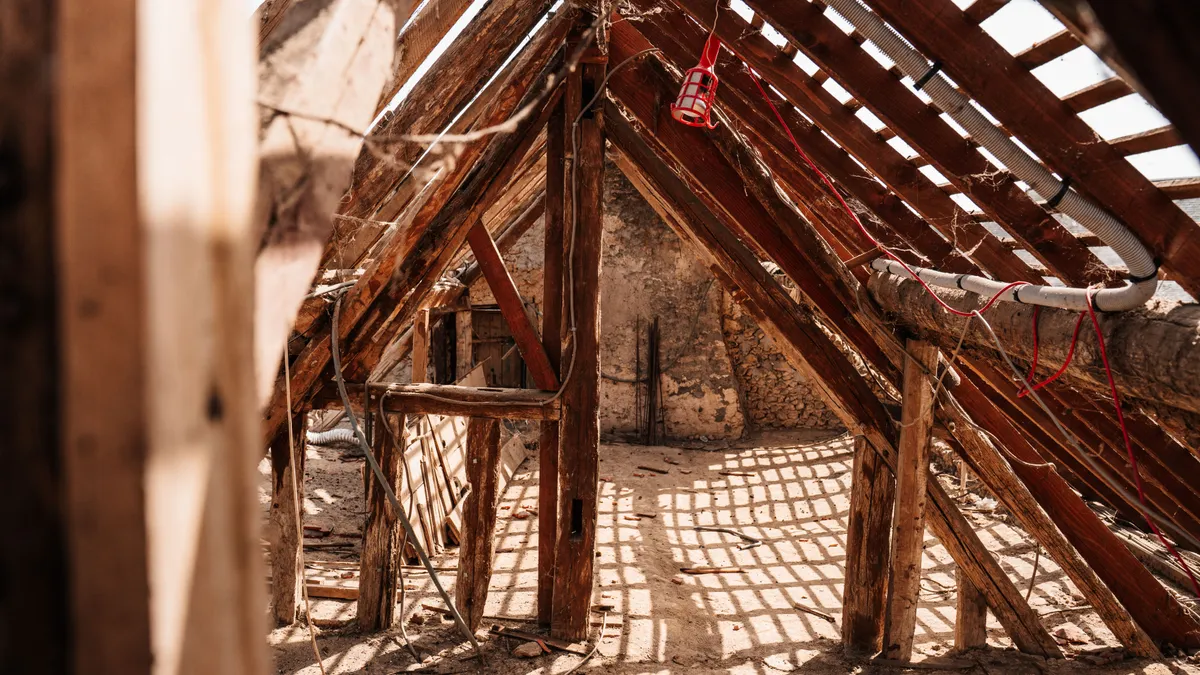
Frost on the roof sheathing, damp plywood or a musty smell in the attic can look like a roofing failure. In a Kelowna winter, the more common cause is warm, moist indoor air leaking through the ceiling and condensing on cold wood. The two problems look similar but need different fixes. This guide gives you a cheap two-visit inspection, a table that separates condensation from roof-leak water, and a clear order for fixing air sealing, ventilation and insulation.
Why does attic condensation show up in Kelowna winters?
A heated house behaves like a chimney. Warm air rises and pushes through gaps in the ceiling: the attic hatch, plumbing stacks, wiring holes, pot lights, wall top plates and the chimney chase. That air carries moisture from showers, cooking, laundry and breathing. When it reaches the attic, the roof sheathing is close to outdoor temperature. Moisture condenses on the cold wood, and on a clear night below freezing it forms frost.
The moisture load is larger than most people expect. Natural Resources Canada estimates that a family of four adds about 50 litres of water a week through normal activities. Indoor air at 30–50% relative humidity is a reasonable target, lower in winter and higher in summer. Higher humidity, or more leakage, builds frost faster.
Some frost is normal. Natural Resources Canada says light frost is expected, but heavy buildup of 10 mm (3/8 in) or more means checking whether ventilation is present and whether insulation is blocking it.
Is it condensation or a roof leak?
Timing is the cheapest test. Check during or just after a cold snap for frost, then during or just after rain for water entry. Natural Resources Canada recommends both because they separate an interior source from an exterior one.
| Clue | More likely condensation | More likely a roof leak |
|---|---|---|
| When it appears | After cold, clear nights; often worse at the end of a cold snap | During or just after rain, or when snow melts |
| Where it is | Spread across a slope, often the north side, or around penetrations into the house | One area, often near a valley, hip, chimney, skylight or flashing |
| Nail tips | Frost or rust on many nails | Damp along one water path |
| Insulation | Damp or discoloured over a wide area | Soaked in one localized spot |
| Sheathing stain | Even darkening or speckling | A tide-line stain running downhill |
| What makes it worse | Colder weather, higher indoor humidity, a bath fan venting into the attic | Rain, wind-driven rain, ice damming |
A ceiling stain that appears only in spring can be winter ice melting. CMHC notes that ice can form on the sheathing all winter and melt during a warm spell, which looks like a leak. Broad frost and damp sheathing point to condensation; a water track from one roof detail points to a leak. Both can be present in the same attic.
What should you check first? A cheap two-visit inspection
You do not need a moisture meter to start, although one helps. A flashlight, phone camera, notebook and tape measure are enough. Do the inspections on two different days: one cold, clear morning and one rainy day.
- Use a clear morning after a cold night for the first visit, and a separate rainy day for the second.
- Photograph the hatch and the ceiling around it before you open anything.
- Enter with a flashlight and look at the underside of the sheathing, starting at the north slope and working toward the ridge.
- Note where frost or water is: broad patches, nail tips, the hatch, over the bathroom, near the plumbing stack, or under a valley or chimney.
- Check the insulation surface for dampness, compression, discolouration and drip marks.
- Look at the eave. Are the soffit vents clear, or is insulation pushed against the roof deck? A baffle should hold a clear channel.
- Confirm that bathroom, kitchen and dryer exhaust ducts run outside, not into the attic.
- Record the outdoor temperature, indoor humidity if you have a gauge, and whether it rained in the last 24 hours.
Repeat the same route on the second visit. The pattern across two visits beats any single reading.
Which attic problems point to air leaks?
Condensation is a detective story about holes in the ceiling plane. The suspects are the attic hatch, plumbing stacks, wiring and electrical boxes, recessed lights, wall top plates, bathroom fan housings, the chimney chase and ducts through the ceiling.
CMHC lists condensation, frost, black stains and mould on trusses and sheathing, especially near vents, plumbing stacks, wiring and electrical fixtures. It names gaps around ducts, framing, pipes and fixtures, exhaust fans vented into the attic, a missing chimney fire stop and leaky attic ducts. Discoloured insulation often marks the path where air has been moving.
A hatch that does not seal is a weekend job. A missing chimney fire stop, or a recessed light not rated for insulation contact, needs the right parts and sometimes an electrician. The inspection separates the small openings from the ones that need a professional.
Why is adding ventilation not the first fix?
The reflex is to add roof vents. CMHC is direct: increasing attic ventilation is the wrong response, and in some cases adding ventilation pulls more moist house air into the attic and makes it worse. Once air movement from the house stops, existing ventilation is usually enough.
Natural Resources Canada makes the same point. Vents will not prevent condensation and will not solve air leakage. It also warns against electric attic exhaust fans: they can draw more air than soffit vents supply, pulling house air into the attic. Wind-driven turbine vents do not create suction and are no better than capped vents.
BC Housing puts the order plainly: all insulation work begins with air sealing. Never insulate a wall, roof or floor without first addressing air leaks nearby. Adding insulation to a leaky ceiling makes the attic colder, so the same leak condenses more readily.
What order should you fix air sealing, ventilation and insulation?
The sequence that matches the sources is: seal the ceiling plane, confirm the ventilation path works, then add insulation. The other order can bury the leak or make the attic colder without fixing the moisture source.
| Requirement | Code minimum (BCBC 2024) | What it means at home |
|---|---|---|
| Vent area, standard pitched roof | 1/300 of the insulated ceiling area | 1 m² of vent area per 300 m² of ceiling |
| Vent area, low slope or roof joists | 1/150 of the insulated ceiling area | Flatter or joist-built roofs need twice the vent area |
| Vent distribution | At least 25% at the top and 25% at the bottom, uniform on opposite sides | Soffit intake plus ridge or high exhaust, not one-sided |
| Clearance above insulation | At least 63 mm between the insulation top and the sheathing | Keep insulation below the roof deck; use depth markers |
| Baffle at roof and wall junction | At least 25 mm air space; baffle extends 50 mm above the insulation | Baffles keep the soffit path from being buried |
The vent ratios are minimums for permitted construction, not a retrofit target. The practical checks are simpler: are the soffit vents clear, is there a continuous path from eave to a high vent, and is the insulation below the roof deck rather than packed into the eave? If any answer is no, fix the path before adding vents.
Air sealing is the part most homeowners can start, but it must be done safely. Seal the hatch with weatherstripping and a latch, insulate the hatch cover, and seal obvious gaps with caulking or approved foam. Leave the chimney, flue and recessed lights to the pros unless you know the correct clearances and parts. Bathroom, kitchen and dryer exhaust must terminate outside, not in the attic or under the soffit.
When should you call a professional?
Call a roofer if the pattern points to a roof leak: a water track from a valley, hip, chimney, skylight or flashing, or water that appears during rain. A roofer can also check ice damming at the eaves. The guide to choosing a roofer in Kelowna explains what to ask.
Call an insulation or air-sealing contractor for broad frost, damp sheathing, or air leaks at the ceiling plane. Call an HVAC contractor if bath and kitchen fans are weak, ducting is wrong, or the house has no mechanical ventilation. BC Housing notes that air sealing makes a house tighter, so a properly sized ventilation system matters.
Get help before entering if you find vermiculite, widespread mould, soft or stained framing, a sagging ceiling, or wiring you cannot identify. Health Canada says vermiculite may contain asbestos and should not be disturbed. Widespread mould or rot is a restoration problem, not a caulking job. A home inspector can document conditions for insurance or resale.
Where to start in Kelowna
Start with the two-visit inspection, then write down what you saw. If it is a leak, contact a Kelowna roofing contractor. If it is condensation, ask an insulation contractor about air sealing first, then ventilation. The Kelowna HVAC trade page lists ventilation contractors, and drywall and insulation contractors handle attic sealing and insulation. The seasonal home maintenance checklist covers once-a-year checks, and the Kelowna city hub compares trades.
Sources
- British Columbia Building Code 2024, Division B, Section 9.19 (Roof Spaces)
Province of British Columbia · Published March 8, 2024 · British Columbia; 2024 edition, Part 9 roof space venting and clearances
Accessed November 19, 2026
- Attic Venting, Attic Moisture, and Ice Dams
Canada Mortgage and Housing Corporation · Canada; About Your House CE 13, Order No. 62034, revised 2007
Accessed November 19, 2026
- Moisture and Air: A Guide for Understanding and Fixing Interior Moisture Problems in Housing
Canada Mortgage and Housing Corporation · Canada; condensation causes and common attic locations, revised 2015
Accessed November 19, 2026
- Keeping the Heat In: Section 5, Roofs and attics
Natural Resources Canada · Published March 6, 2014 · Canada; page updated 2026-11-05; attic inspection, humidity and vent guidance
Accessed November 19, 2026
- Best Practice Guide for Air Sealing and Insulation Retrofits for Single Family Homes
BC Housing · Published May 14, 2020 · British Columbia; 2020 Revised Edition; air sealing order, attic safety and asbestos
Accessed November 19, 2026
- Asbestos and your health
Health Canada · Canada; vermiculite insulation and asbestos precautions
Accessed November 19, 2026
Common questions
Is frost in the attic always a roof leak?
Will more attic ventilation fix the condensation?
How much frost in an attic is normal?
Should I add insulation before sealing air leaks?

Written by
Jonathan Larose-Sabourin
Founder, Loonglade Web Studio · Kelowna, British Columbia
Jonathan Larose-Sabourin is the founder of Loonglade Web Studio, the Kelowna-based studio that operates this trades registry. He writes about local home-services rules, costs and maintenance for Kelowna homeowners.
Share this story
Related stories
Home Maintenance
Heat Pump Defrost in a Kelowna Winter: What Is Normal
Frost, vapour and a short blast of cool air can all be normal. Here is how to tell a working defrost cycle from a fault.
November 21, 2026 · 9 min read
Home Maintenance
Roof Snow Load in Kelowna: What Homeowners Should Know
The code sets a design load. Your roof needs a site-specific answer, and the difference matters on a heavy snow day.
November 16, 2026 · 10 min read
Home Maintenance
Kelowna Spring Freshet: A Homeowner Checklist
Most freshet damage starts with a blocked path or a failed pump, not a river over the bank. Work through the list before the snowpack goes.
November 16, 2026 · 10 min read
Find roofing in Kelowna
Compare local listings on the Roofing in Kelowna page.
Before you call, read the How to Choose a Roofer in Kelowna.
Save the pros you trust.
Create a free account to save listings, compare them later, and rate the tradespeople you hire — it helps your neighbours hire well.