
Home Maintenance
Roof Snow Load in Kelowna: What Homeowners Should Know
The code sets a design load. Your roof needs a site-specific answer, and the difference matters on a heavy snow day.
Jonathan Larose-SabourinPublished November 16, 202610 min read
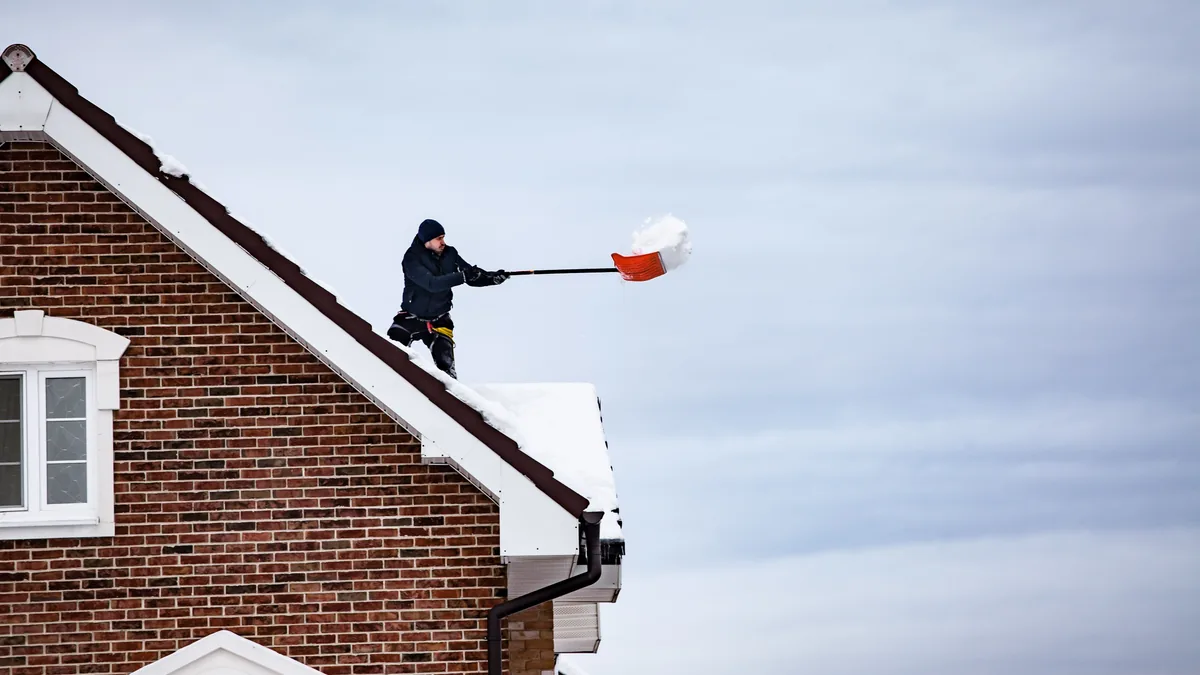
Snow load is one of those phrases that sounds precise until a homeowner tries to use it. The BC Building Code gives a design value for Kelowna, and the City of Kelowna's building bylaw gives a closely related value for permit work. Neither number tells you whether the roof over your kitchen is safe this morning. The code value is a starting point for designers. The roof in front of you has its own age, framing, drainage, additions and drift patterns. This guide explains what the numbers mean, when to clear snow, which warning signs deserve a professional, and why the safest answer is often a short conversation with a roofing contractor or engineer rather than a calculator.
What does snow load mean for a Kelowna roof?
Snow load is the weight of snow and associated rain on a roof, expressed as a pressure over an area. In Canada, the unit is the kilopascal, or kPa. A kilopascal is a pressure unit, not a depth. That is why two roofs with the same depth of snow can carry very different loads: wet snow is heavier than dry powder, and a drift against a wall can be several times deeper than the snow in the middle of the roof.
The BC Building Code separates the ground snow load from the roof snow load. The ground value is the starting climate number. The roof value is what a designer calculates after accounting for the importance of the building, roof shape, wind exposure, slope and snow accumulation. The code factors are there because snow does not sit evenly on a real roof. It slides, drifts, piles up in valleys and collects behind parapets and roof steps.
For a homeowner, the useful distinction is simpler. A design load is a number used before construction. A maintenance question is about what is sitting on the roof now. A structural question is about whether the framing can still carry what is sitting there. Those are three different questions, and they need three different answers.
What does the BC Building Code require?
The BC Building Code 2024 came into effect on March 8, 2024 and applies to projects with building permits applied for after that date. Article 4.1.6.2 sets out the specified snow load calculation. It starts with the 1-in-50-year ground snow load, written as Ss, and the associated 1-in-50-year rain load, written as Sr. It then applies factors for importance, basic roof snow load, wind exposure, slope and accumulation. The result is a design load for the roof being designed, not a universal answer for every roof in the city.
For light-frame construction such as many houses, Part 9 provides a simplified method. Article 9.4.2.2 uses a basic roof snow load factor of 0.45 where the entire roof width does not exceed 4.3 metres, and 0.55 for all other roofs. It also sets a floor: the specified snow load must not be less than 1 kPa. The code also requires extra load over a drift length where a roof step is greater than 2 metres, the upper roof slope is less than 1 in 6 and the upper roof area is greater than 600 square metres.
| Source | Ground snow load | Associated rain load | What it is for |
|---|---|---|---|
| BC Building Code 2024, Appendix C, Table C-2 | 1.7 kPa | 0.1 kPa | Climate data for design at the listed Kelowna location |
| City of Kelowna Building Bylaw No. 7245, Part 8.1 | 1.8 kPa | 0.1 kPa | Climatic data for building design in the city |
The two values are close, but they are not the same number. The City bylaw also says that all other climatic data should come from the current edition of the Building Code. If you are working on a permit application, use the value the authority having jurisdiction asks for and let the designer confirm it. If you are standing in the driveway looking at a roof, do not use either number as a snow-depth limit. They are inputs to a design calculation, not a homeowner test.
When should you clear snow, and when should you not?
There is no universal depth at which every Kelowna roof must be cleared. A shallow roof with good drainage and sound framing is different from a wide flat roof with a parapet, a valley that collects drift, or an older addition with unknown connections. The type of snow matters too. Wet, dense snow is heavier than the same depth of dry snow, and rain on top of snow adds weight without adding much visible depth.
WorkSafeBC's guidance for roof clearing starts with a useful rule for homeowners as well: try to keep people off the roof. It suggests alternatives such as de-icing cables, extendable snow rakes or an aerial lift. If workers do go up, WorkSafeBC says the plan must address hidden hazards, fall protection, access, roof load limits and how to remove snow without creating an unbalanced load. It notes that snow places stress on a building, so it should be cleared in uniform sections and not piled on the roof.
| Situation | What to check | Who confirms it |
|---|---|---|
| Older roof or unknown history | Original design load, past additions and any permit records | Structural engineer or the authority that holds the permit records |
| Heavy or wet snow | Depth, drift, ice dams and whether the snow is loading one area | Roofer for access and removal; engineer if the structure is in question |
| Flat roof | Drainage, ponding, parapets and snow piled against walls | Roofer or engineer |
| New addition or roof step | Drift at the step, connection details and whether the addition changed the load path | Designer or structural engineer |
| Roof already showing movement or leakage | Sag, cracks, sticking doors, water entry and the condition of framing | Structural engineer before anyone spends time on the roof |
A roof rake used from the ground can remove snow from a low, accessible roof edge without putting a person on the roof. Even then, keep the rake and your body clear of overhead power lines, and do not stand under a roof that is shedding snow or ice. WorkSafeBC also warns that snow sliding off a roof and falling icicles are overhead hazards, which is why the ground below a pitched roof can be dangerous during a thaw.
Which warning signs need a professional?
Some signs are maintenance issues. Others are structural warnings. The difference is not always obvious, so treat the following as reasons to stop and ask rather than reasons to diagnose the roof yourself.
- A roof line that looks visibly sagging or curved, especially over a wide span or a flat roof.
- New cracks in drywall or plaster, particularly near ceiling edges, wall corners or the tops of doors.
- Doors or windows that suddenly stick, or a floor that feels different, which can signal movement in the structure.
- Popping, creaking or groaning sounds that are new, repeated or getting louder under snow load.
- Water stains, drips or ice on the inside of the roof, or water running down a wall.
- Ice dams at the eaves, where meltwater refreezes and can back up under roofing materials.
- A deep drift against a wall, in a valley, behind a parapet or beside a roof step.
- Cracked, split or separated framing, if you can see it safely from an accessible attic hatch without climbing on the roof.
If any of those signs appear, keep people out of the affected rooms and away from the exterior below the roof. Call a roofer for access, drainage and roof-clearing questions, and a structural engineer when the question is whether the roof can carry the load. If the roof looks like it is about to collapse, or someone is injured, call 9-1-1 and do not wait for a contractor.
What is different about flat roofs, additions and older homes?
Flat roofs concentrate water and snow in ways that pitched roofs do not. Drainage matters. If a drain or scupper is blocked, meltwater can pond, and ponding adds load in the same area that is already carrying snow. Parapets can trap snow and create drifts. A flat roof also gives a homeowner fewer visual clues, because the surface cannot be seen from the ground.
Additions and roof steps create drift. The code's extra load over a drift length exists for a reason: snow blows off a higher roof and lands on the lower one. A small addition with a new roof step can therefore change the load on the original roof, not just the new part. The connection between the old and new structure matters too, and that is a design question, not a maintenance question.
Older homes may have been built to an earlier edition of the code, or to no permit record that is easy to find. That does not mean the roof is unsafe. It does mean the original design load is not something to guess from the age of the shingles. If the roof has been re-covered, extended, had a skylight added or carried a heavy piece of equipment, an engineer may need to review the framing before anyone declares it fine.
Insurance is a separate question. The Insurance Bureau of Canada notes that additional coverage for roof ice damming may be available for purchase, which is a reminder that water backing up under the roof is not always treated like a simple maintenance issue. Ask your insurer or broker what your policy says before a leak becomes a claim.
How do you hire a roofer or engineer for a snow-load question?
Start by deciding what you need. A roofer is the right call for roof snow clearing, roof access, drainage, flashing, ice dams and visible roof damage. A structural engineer is the right call when the question is whether the framing can carry the load, whether an addition changed the load path, or whether a sag or crack is structural. Some jobs need both, and a good roofer will say so.
- Ask for a written scope: what will be inspected, what will be cleared, what will be repaired and what is excluded.
- Ask how the contractor will access the roof and what fall protection will be used.
- Confirm the contractor carries the insurance and WorkSafeBC coverage that applies to the work.
- Ask whether a building permit is required for any repair or alteration, and who will obtain it.
- For an engineering question, ask for a written finding that states the assumptions and the recommended action.
- Do not accept a verbal “it should be fine” for a roof that is showing movement, leakage or a deep drift.
For routine roof work, the Kelowna roofing trade page lists local roofing contractors, and the guide to choosing a roofer explains what to ask before hiring. For roof snow clearing and seasonal snow work, the snow removal contractors page lists local services. For seasonal upkeep around the rest of the house, the seasonal home maintenance checklist for Kelowna is a useful place to start. No listing or guide replaces an engineering assessment when the roof itself is the question.
Sources
- BC Building Code 2024
Province of British Columbia · Published March 10, 2025 · British Columbia; code edition and effective date
Accessed November 16, 2026
- BC Building Code 2024, Division B, Articles 4.1.6.2, 9.4.2.1, 9.4.2.2 and Appendix C Table C-2
Province of British Columbia · Published 2024 · British Columbia; specified snow loads and Kelowna climate data
Accessed November 16, 2026
- City of Kelowna Building Bylaw No. 7245, Part 8.1
City of Kelowna · Published March 1, 2021 · City of Kelowna; ground snow load, associated rain load and frost depth
Accessed November 16, 2026
- Ask an officer: Snow removal plan reduces the risks of winter hazards
WorkSafeBC · Published December 13, 2019 · British Columbia; roof snow removal and fall hazards
Accessed November 16, 2026
- Types of home coverage
Insurance Bureau of Canada · Published September 15, 2025 · Canada; home insurance perils and ice damming coverage
Accessed November 16, 2026
Common questions
What snow load does Kelowna use?
Is there a snow depth at which I must clear my roof?
Can I clear snow off my own roof?
Does a newer roof automatically meet the current code?

Written by
Jonathan Larose-Sabourin
Founder, Loonglade Web Studio · Kelowna, British Columbia
Jonathan Larose-Sabourin is the founder of Loonglade Web Studio, the Kelowna-based studio that operates this trades registry. He writes about local home-services rules, costs and maintenance for Kelowna homeowners.
Share this story
Related stories
Permits & Rules
Secondary Suite Rules in Kelowna: Permits and Inspections
The City's current suite requirements, translated into the questions to settle before you hire anyone.
November 16, 2026 · 9 min read
Home Maintenance
Attic Condensation in Kelowna Winters: Causes and Fixes
A cheap two-visit inspection that separates air-leak condensation from roof-leak water, then fixes air sealing, ventilation and insulation in order.
November 21, 2026 · 8 min read
Home Maintenance
Heat Pump Defrost in a Kelowna Winter: What Is Normal
Frost, vapour and a short blast of cool air can all be normal. Here is how to tell a working defrost cycle from a fault.
November 21, 2026 · 9 min read
Find roofing in Kelowna
Compare local listings on the Roofing in Kelowna page.
Before you call, read the How to Choose a Roofer in Kelowna.
Save the pros you trust.
Create a free account to save listings, compare them later, and rate the tradespeople you hire — it helps your neighbours hire well.