
Costs & Budgets
EV Charger Installation in Kelowna: Permits and Panel Checks
A Level 2 charger is a small appliance with a large electrical question behind it. Here is the order to check things in.
Jonathan Larose-SabourinPublished November 16, 20269 min read
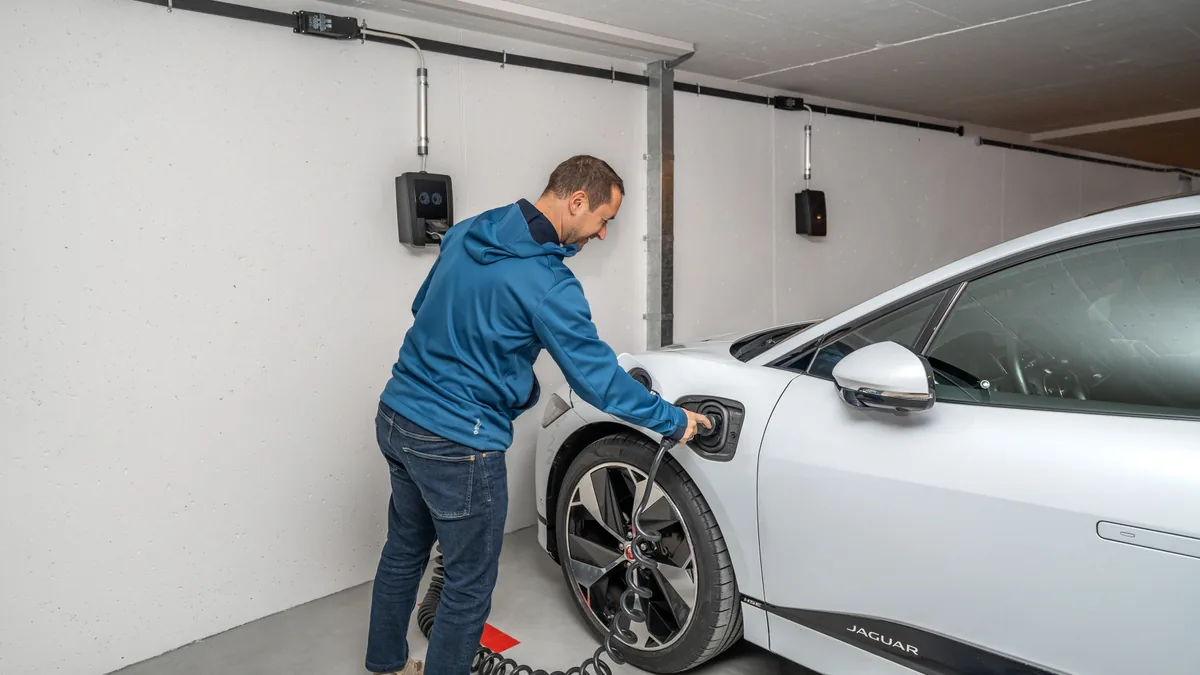
A home EV charger looks simple: a box on the wall and a cable to the car. The expensive part is usually behind the wall. A Level 2 charger needs a 208 or 240 volt circuit, and the house has to have the electrical capacity to carry it safely. In British Columbia, the work also needs an electrical permit and an inspection. Before buying a charger, a Kelowna homeowner should settle three questions: what the panel can support, who is pulling the permit and whether the charger and installation qualify for the current rebate.
What an EV charger installation includes
Most home charging happens on a Level 1 cord plugged into a standard 120 volt outlet, or on a Level 2 charger on a 208 or 240 volt circuit. Natural Resources Canada says more than 80% of EV owners charge at home. A Level 2 charger typically adds 16 to 50 kilometres of range per hour and can charge a vehicle in about 4 to 10 hours, depending on the vehicle and charger. That is the practical reason people upgrade: not a different fuel, just a faster connection.
The installation has four parts. First, electricians check the service and panel capacity. Second, the circuit is designed and the charger is selected. Third, the permit is obtained before regulated work begins. Fourth, the work is installed, declared and inspected. Skipping the first or third step is how a straightforward purchase turns into a service upgrade, a failed inspection or an insurance question.
- A charger that is approved for sale in Canada and on the utility's eligible list, if you want the rebate.
- A dedicated circuit sized for the charger, not a shared outlet.
- An electrical permit in the right name before work starts.
- An inspection and the paperwork the rebate program asks for.
- A plan for the cable, the mounting location and weather protection if the car parks outside.
Check the electrical panel before you buy a charger
BC Hydro recommends hiring an electrician to assess the electrical capacity available for EV charging. The electrician should review the past 12 months of meter data to understand the home's spare capacity, not just glance at the panel label. A house can have a 200 amp service and still have little room for a continuous 32 or 40 amp load after heating, cooking, hot water and air conditioning are counted.
If capacity is tight, there are two common paths. One is an EV power management device, which controls electrical loads so the charger does not exceed what the service can safely supply. BC Hydro offers a separate $200 rebate for an eligible power management device for single-family customers installing a Level 2 charger. The other path is a service upgrade. BC Hydro says to contact its Express Connect team for service upgrades. A service upgrade is a much larger project than a charger install, so it belongs in the decision before the charger is purchased.
The charger's electrical requirements also matter. Kelowna's EV Ready bulletin describes a dedicated circuit as 208–240 volts AC, single-phase, with a minimum 32 amp circuit on a 40 amp branch breaker. That is a useful benchmark when comparing quotes, but the final design has to match the charger, the wiring method and the current BC Electrical Code. Do not buy a charger first and ask the electrician to make it fit afterward.
Permits and inspections in British Columbia
Technical Safety BC says installing an EV charger without a permit puts the vehicle, home, building and property at risk. A permit confirms the work is performed to code and is subject to inspection. The regulator also says permits are legally required for EV charger installations in BC, and unpermitted work can lead to enforcement action or issues with home insurance. Some rebate programs require a valid permit, so skipping it can cost both safety and money.
| Check | Why it matters | Who confirms it |
|---|---|---|
| Panel and service capacity | The charger is a continuous load and may need a service upgrade or load management | Licensed electrician, using the home's meter data |
| Electrical permit | Most EV charger installations require an electrical installation permit before work starts | Technical Safety BC, or the municipality that issues permits in its area |
| Inspection and declaration | The work is declared and inspected; the rebate may require proof | Technical Safety BC or municipal electrical inspector |
| Charger eligibility | Not every charger qualifies for the current rebate, and the list changes | BC Hydro's eligible charger list and the installer |
| Rebate application | Documents are due within 180 days of installation | Homeowner, with the electrician's invoices and permit number |
| Strata or landlord approval | A homeowner permit is not available for strata or non-strata duplex properties | Strata council or landlord, plus a licensed contractor |
Who issues the permit depends on where the property is. Technical Safety BC issues electrical permits except in Burnaby, Maple Ridge, North Vancouver, Surrey, Victoria, Vancouver and West Vancouver, where the municipality issues them. Kelowna is not on that list, so Technical Safety BC is the likely issuer, but confirm before work starts. The person or company doing the regulated work is generally responsible for obtaining the permit, and a licensed electrical contractor normally applies on the homeowner's behalf.
A homeowner permit exists, but it is narrow. Technical Safety BC says a homeowner electrical permit may only be issued where the current does not exceed 200 amps, the voltage does not exceed 150 volts to ground and the power is single-phase. Owners of a strata, a non-strata duplex or a business operated from home cannot obtain homeowner permits and must hire a licensed contractor. For an EV charger in a fully detached dwelling, Technical Safety BC says it may issue a homeowner installation permit, but the safer and more common route is to let the licensed contractor pull it.
Costs and rebates: what to verify
BC Hydro's current home charger rebate covers up to 50% of the purchase and installation cost, to a maximum of $350, for eligible Level 2 chargers at single-family homes, row homes and duplexes. The rebate can be combined with other incentives, but the total cannot exceed the cost of the equipment and installation. The application is due within 180 days of installation, and the program can change, so check the live page before relying on the number.
Eligibility is specific. The charger must be on BC Hydro's eligible model list, purchased in Canada, approved for sale in Canada with cUL, ULC, cETL, CSA or cQPS certification, and be a Level 2, 208 or 240 volt unit with a NACS J3400 or SAE J1772 plug. It must be new, permanent and either plug-in or hardwired. BC Hydro's page says Tesla charging stations are no longer eligible. An electrical permit must be obtained, and the rebate is not available for the cost of only installing a 240 volt outlet.
- Get the charger invoice and the installation invoice with itemized labour and permit costs.
- Keep the electrical permit number; BC Hydro asks for it.
- Take a photo of the installed charging station as the application requires.
- Apply within 180 days of installation.
- Confirm whether your municipality or BC Hydro offers a top-up before assuming the $350 is the ceiling.
Do not treat a rebate as a price. Installation cost depends on the distance from the panel, whether the cable runs through a finished wall, whether trenching is needed, the charger itself and whether the service needs an upgrade. A quote that is much lower than the others may exclude the permit, the inspection or the material needed for a safe installation. Compare itemized quotes, not a single total.
Renters, condos and strata
Renters and strata owners face a different approval path. A tenant usually needs the landlord's written permission, and a strata owner needs the strata's approval before altering common property or adding electrical infrastructure. Technical Safety BC says owners of a strata or non-strata duplex cannot obtain homeowner electrical permits, so a licensed contractor must do the work and pull the permit. For shared parking, the building may need load calculations and an EV energy management system rather than a dedicated circuit for every stall.
Kelowna's EV Ready rule applies to new residential development, not retrofits. Since April 1, 2024, new residential developments that provide a parking space for a dwelling unit must provide an energized outlet capable of Level 2 charging, at one space per dwelling unit that has parking. The bulletin says the rule does not apply to renovations, additions or a change of use to an existing building, or to projects already in stream before the date. That matters for anyone buying a new townhome or apartment: the EV infrastructure may already be designed in, and the conversation is about the charger and metering, not a new service.
For an existing strata building, start with the strata council and the building's electrical capacity. A charger in a shared garage is not the same project as a charger in a detached garage, and the approval, metering and load-management questions should be answered before an owner buys hardware.
Questions to ask an electrician
- Will you review the past 12 months of meter data and show me the load calculation?
- Does the panel have room for the charger, or do I need load management or a service upgrade?
- Which permit will you pull, and is it included in the quote?
- Is the charger I chose on BC Hydro's current eligible list?
- What circuit and breaker size does the charger require, and how long is the cable run?
- How will the cable be protected outdoors and through any finished space?
- Who requests the inspection, and what do I get as proof it passed?
- What documents will I need for the rebate, and will you provide an itemized installation invoice?
- If this is a strata or duplex, what approval and metering work is required?
A good electrician will answer the permit and capacity questions before discussing brand features. If the quote does not mention the permit, ask whether it is excluded. If the quote promises a rebate amount, check the current BC Hydro page yourself, because program terms and eligible models change.
Where to start in Kelowna
Start with the panel, not the shopping cart. Ask a licensed electrician to review the service and meter data, confirm the permit path and give you an itemized quote that includes the inspection. Then choose a charger that meets the current rebate list if the rebate matters to you. The Kelowna electricians page lists local contractors, the guide to choosing an electrician explains how to compare them, and the Kelowna city hub is the place to compare other trades if the project grows into a service upgrade or renovation.
Sources
- Electric Vehicle (EV) Charger Installation
Technical Safety BC · British Columbia; EV charger permits and load calculations
Accessed November 16, 2026
- Electrical Installation Permits
Technical Safety BC · British Columbia; permit requirements and homeowner thresholds
Accessed November 16, 2026
- Homeowner Electrical Permits
Technical Safety BC · British Columbia; homeowner permit restrictions
Accessed November 16, 2026
- Ask a Safety Officer: Electric vehicle charger safety
Technical Safety BC · Published November 4, 2021 · British Columbia; EV charger installation in detached dwellings
Accessed November 16, 2026
- Electric vehicle charger rebate program for single-family homes
BC Hydro · British Columbia; home charger rebate
Accessed November 16, 2026
- How to install an EV charger at home
BC Hydro · British Columbia; panel assessment and permit steps
Accessed November 16, 2026
- Rebates for EV power management devices
BC Hydro · British Columbia; power management device rebate
Accessed November 16, 2026
- Electric vehicle charging
Natural Resources Canada · Published April 17, 2023 · Canada; Level 2 charger facts
Accessed November 16, 2026
- Electric vehicle charging – Charger installation
Natural Resources Canada · Published April 18, 2023 · Canada; home charging share
Accessed November 16, 2026
- Bulletin: Electric Vehicle Ready Requirements
City of Kelowna · Published 2024-02 · Kelowna, BC; new residential EV Ready requirements
Accessed November 16, 2026
Common questions
Do I need a permit to install an EV charger in Kelowna?
How much is the BC Hydro EV charger rebate?
Can I install my own EV charger?
Will I need an electrical panel upgrade?

Written by
Jonathan Larose-Sabourin
Founder, Loonglade Web Studio · Kelowna, British Columbia
Jonathan Larose-Sabourin is the founder of Loonglade Web Studio, the Kelowna-based studio that operates this trades registry. He writes about local home-services rules, costs and maintenance for Kelowna homeowners.
Share this story
Related stories
Costs & Budgets
Renovation Insurance in Kelowna: What to Check First
A renovation can change occupancy, value and who is responsible for damage. The policy wording decides what happens next.
November 16, 2026 · 9 min read
Home Maintenance
Attic Condensation in Kelowna Winters: Causes and Fixes
A cheap two-visit inspection that separates air-leak condensation from roof-leak water, then fixes air sealing, ventilation and insulation in order.
November 21, 2026 · 8 min read
Permits & Rules
Fence Height Rules in Kelowna: What the Bylaw Says
The bylaw numbers, the lot-type exceptions and the steps that keep a new fence out of a bylaw complaint.
November 21, 2026 · 8 min read
Find electricians in Kelowna
Compare local listings on the Electricians in Kelowna page.
Before you call, read the How to Choose an Electrician in Kelowna.
Save the pros you trust.
Create a free account to save listings, compare them later, and rate the tradespeople you hire — it helps your neighbours hire well.