
Home Repair Emergencies in Kelowna: Who to Call First
Last updated: 2026-10-01
Home emergencies are stressful, and the order you handle things in matters more than speed. In Kelowna, that order is usually: make the situation safe, stop the damage, call the right trade, then call your insurer. This guide covers the emergencies that need the fastest decisions — a burst pipe, a gas smell, an electrical fault, a furnace that quits in a cold snap, and storm or smoke damage — and who to call for each.
Make it safe first
In Kelowna, natural gas and electricity come from FortisBC, while water and sewer are City of Kelowna services. If you are on propane, a well or a septic system, the provider named on your bill is the one to call. Whatever the emergency, deal with the danger before the damage.
- Gas smell: if you smell rotten eggs or hear hissing near a gas appliance or meter, stop what you are doing. Do not use your phone, switches or anything else that could spark. Get everyone outside, leaving the door open behind you, and call the FortisBC emergency line from outside — the 24-hour number is on your gas bill — or call 911. Never look for the leak or try to repair it yourself.
- Electrical: if you see sparks, smoke or a burning smell from an outlet, switch or panel, get everyone out and call 911. Do not touch someone who is being shocked; turn the power off at the panel first, and only if you can do it safely.
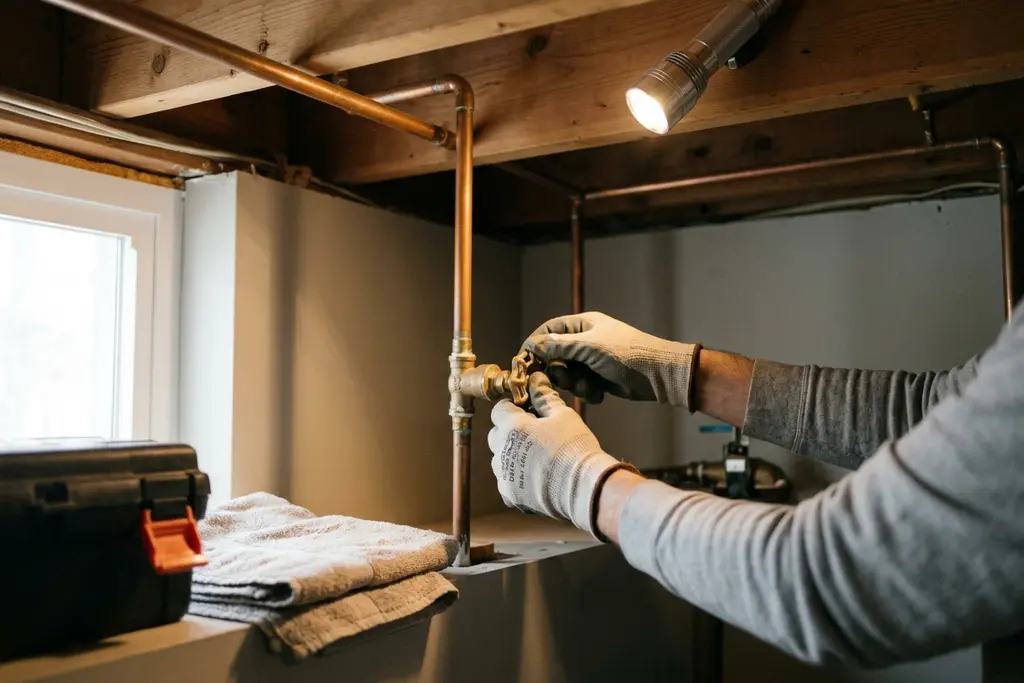
- Water: if water is pouring in, shut off the main water valve, usually near the water meter where the supply enters the house. Turn it clockwise until it is fully closed.
- Structural: treat a sagging ceiling, a cracked wall or a leaning tree as unstable. Keep people away and have the damage assessed before you use the space.
Water emergencies
A burst pipe, a failed supply line or an overflowing appliance can release a lot of water fast. The first move is always the same: stop the water at the source. For a single fixture, use the shut-off valve behind or under it; for anything bigger, close the main valve. Then call a plumber for the repair and a restoration company if the water has spread.
- Shut off the main water valve first — turn it clockwise until it is fully closed.
- Photograph and video everything before you move or throw anything out.
- Keep every cleanup receipt, including towels, fans and rented equipment.
- Call a plumber to stop the source. Call a restoration company when water has soaked carpet, drywall or insulation, or when the water is a sewage backup.
- If water may have reached outlets, wiring or the electrical panel, keep everyone out and call 911 or your utility before anyone goes in.
No heat in winter
Kelowna's cold snaps and freeze-thaw winters make a dead furnace urgent, because a house that cools down puts pipes at risk. Check the thermostat, confirm it is not a neighbourhood power outage, then call a licensed HVAC contractor. Gas appliances should be serviced every year by a licensed contractor, and any gas work has to be done by a licensed gas contractor — do not open a gas appliance yourself. If you smell gas at any point, follow the gas steps above and get outside.
Storm, wind and smoke damage
Okanagan storms can drop trees on roofs, drive rain behind siding and, in wildfire season, push smoke into every gap in the building. If a power line comes down, stay well back, keep everyone else away, and call 911 or FortisBC; treat every line on the ground as live, and never drive over one or try to move it. After the wind dies down, inspect from the ground before going on the roof, and watch for damaged trees, loose siding, cracked skylights and missing shingles. Smoke can travel through filters, ducts and insulation; a restoration company handles residue and odour cleanup, while an HVAC contractor can advise on filters and ductwork.
Call your insurer early
Call your insurer as soon as the danger is handled, not after the repairs. Most insurance companies have 24-hour claims service. The Insurance Bureau of Canada's advice is to document everything before you clean up, keep damaged items unless they are dangerous or a health hazard, and keep all receipts related to the cleanup. If your home is not safe to live in, ask whether Additional Living Expenses are covered — most home policies cover the extra cost of living elsewhere after an insured loss. Your policy also requires you to act to limit further damage, so safe temporary repairs are expected.
- The date, time and cause of the damage, in writing.
- Photos and video of all the damage, plus a room-by-room list of what was affected.
- Receipts, manuals and warranties for damaged items, if you have them.
- Every cleanup and temporary-repair receipt.
- Your claim number and the adjuster's name and contact information.
Red flags worth pausing for
- A crew that appears uninvited after a storm and asks for cash or a large deposit up front.
- An out-of-province "restoration" company with no local address, references or business details you can check.
- Pressure to sign a document that assigns your insurance claim or your right to payment to the contractor.
- Anyone offering to do gas or electrical work without a licence — regulated gas and electrical work in BC must be done by a licensed contractor.
- Verbal promises only: no written scope, no itemized price, no start date and no completion date.
Where to start in Kelowna
Once the emergency is under control, the repair still needs the right trade: a plumber for water lines and fixtures, an HVAC contractor for heating and cooling, an electrician for anything wired, and a restoration company for water, smoke or sewage cleanup. Browse the directory's trade pages for Kelowna, compare the businesses that handle emergency calls, and keep their numbers somewhere you can find them before the next emergency.
Trades mentioned in this guide
Common questions
Who do I call first for a burst pipe — a plumber or a restoration company?
Do I have to call my insurer right away, even at night?
Sources
More guides
— For homeowners —
Save the pros you trust.
Create a free account to save listings, compare them later, and rate the tradespeople you hire — it helps your neighbours hire well.